
 Australia
 Canada
 Cayman Islands
 Dominican Republic
 Hong Kong
 India
India
 Indonesia
 Ireland
 Jamaica
 New Zealand
 Singapore
 Thailand
 United Kingdom
 Vietnam

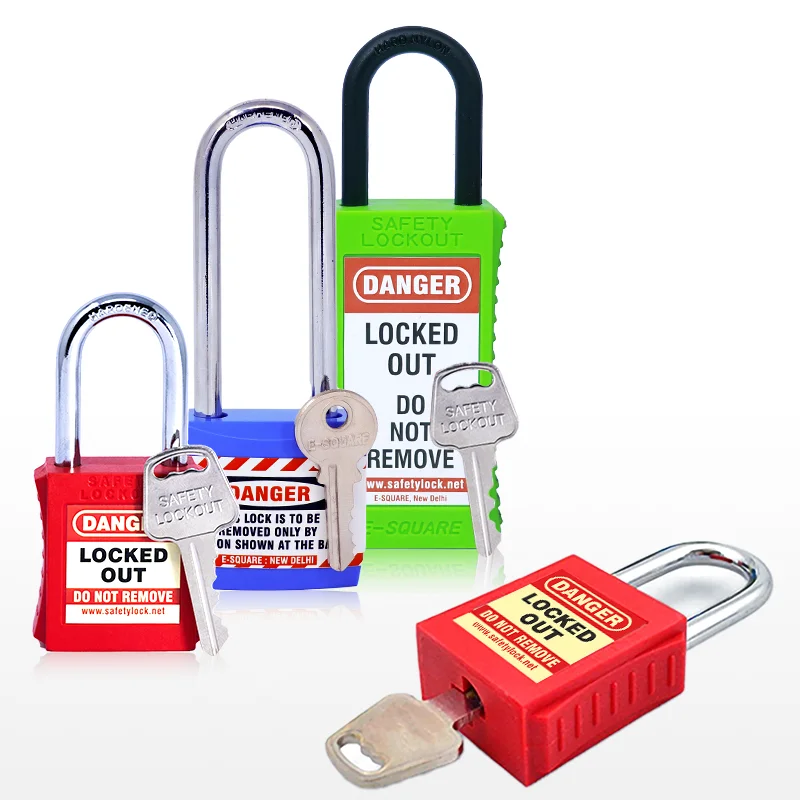
A safety padlock may look like a simple piece of equipment, but in an industrial workplace, it has an important job: helping prevent hazardous equipment from being operated while maintenance or servicing is underway.
When used correctly as part of a Lockout Tagout (LOTO) procedure, a safety padlock helps an authorized worker maintain control over an energy-isolating device. It can be used with circuit breaker lockouts, valve lockouts, lockout hasps, group lockout boxes, and other energy-isolation devices.
But how exactly do you use a safety padlock?
The process is more than simply placing a lock on a switch. The hazardous energy must be identified, the equipment must be shut down and isolated, stored energy must be controlled, and the isolation must be verified before work begins.
In this guide, we will explain how to use a safety padlock step by step, the different types of LOTO padlocks available, how to choose the right one, common mistakes to avoid, and how safety padlocks fit into a complete Lockout Tagout program.
Always follow your organization's approved Lockout Tagout procedure, equipment-specific instructions, training requirements, and applicable regulations. The exact isolation and verification process depends on the equipment and energy sources involved.
How Do You Use a Safety Padlock?
A safety padlock is normally used after equipment has been shut down and the hazardous energy source has been isolated.
The basic process is:
Identify the equipment and hazardous energy sources. Shut down the equipment using the approved procedure. Isolate the energy source. Install the appropriate lockout device. Apply your personal safety padlock. Attach the required identification tag. Release, block, or otherwise control stored energy. Verify that the energy has been effectively isolated. Complete the maintenance or servicing work. Remove your personal lock according to the approved restoration procedure.The padlock is therefore one part of the LOTO system, not a replacement for the complete energy-control process.
What is a Safety Padlock?
A safety padlock, also known as a LOTO padlock, lockout padlock, or safety lockout padlock, is a padlock designed for use in hazardous-energy-control procedures.
Unlike a typical security padlock used for gates, lockers, or storage areas, a safety padlock is intended to support workplace Lockout Tagout practices.
Depending on the application, safety padlocks may be available with different:
Shackle materials Shackle lengths Body materials Keying configurations Identification options Environmental resistance characteristicsA safety padlock may be used with:
Circuit breaker lockouts Electrical disconnect lockouts Valve lockouts Cable lockouts Lockout hasps Group lockout boxes Pneumatic lockout devices Other approved isolation devicesThe purpose is straightforward: help prevent an energy-isolating device from being returned to an energized or operating position while an authorized worker is exposed to the hazard.
Why Are Safety Padlocks Used in Lockout Tagout?
Industrial equipment can contain several types of hazardous energy.
Examples include:
Electrical energy Hydraulic pressure Pneumatic pressure Mechanical energy Thermal energy Chemical energy Stored gravitational energy Pressurized fluids or gasesTurning off a machine does not necessarily eliminate all of these hazards.
For example, pressing a machine's stop button may stop movement, but the machine could still be connected to its electrical supply.
Similarly, switching off electrical power may not eliminate pressure inside a pneumatic or hydraulic system.
A proper LOTO procedure addresses these hazards by controlling the relevant energy sources and verifying the isolation before servicing begins.
A safety padlock provides physical control over the lockout arrangement and helps communicate that the equipment must not be operated.
How to Use a Safety Padlock
The following steps provide a practical overview. The exact procedure should always be based on the equipment and your organization's approved energy-control program.
1. Identify the Hazardous Energy
Before touching the equipment, identify all energy sources associated with the work.
What powers the equipment? Is there electrical energy? Is compressed air involved? Is hydraulic pressure present? Could components move because of gravity? Is there stored mechanical energy? Are hot surfaces or fluids involved? Could another system feed energy into the equipment?This planning step is important because missing an energy source can undermine the entire isolation process.
Review the applicable equipment documentation and site-specific LOTO procedure before beginning.
2. Shut down the Equipment
Follow the equipment's normal shutdown procedure.
Depending on the machine, this may involve:
Stopping the machine through its normal controls Turning off operating switches Allowing moving components to stop completely Following the manufacturer's shutdown instructions Informing affected workers that the equipment will be taken out of serviceRemember that shutdown is not the same as isolation.
A stopped machine may still contain hazardous energy.
3. Isolate the Energy Source
Locate the appropriate energy-isolating device.
This could be:
Electrical disconnect Circuit breaker Disconnect switch Hydraulic isolation valve Pneumatic isolation valve Gas valve Other approved energy-isolating deviceMove the isolating device to the required safe position according to the established procedure.
The goal is to physically isolate the equipment from its hazardous energy source.
4. Install the Lockout Device
Some isolation points cannot accept a safety padlock directly.
In those cases, an appropriate lockout device may be required.
For example:
Electrical application:
Circuit breaker → circuit breaker lockout → safety padlock
Valve application:
Valve → valve lockout → safety padlock
Multiple workers:
Isolation point → lockout hasp/group lockout arrangement → individual safety padlocks
The lockout device must be suitable for the particular isolation point.
Never force, modify, or improvise a lockout device simply to make a padlock fit.
5. Apply Your Safety Padlock
Once the appropriate lockout device is installed, attach your personal safety padlock.
Make sure the padlock is securely engaged with the lockout device.
The purpose of the personal lock is to provide individual control over the lockout.
In a properly managed LOTO program, each authorized worker can have their own identifiable safety padlock.
This becomes particularly important when several people are working on the same equipment.
6. Attach the Lockout Tag
A lockout tag can provide additional identification and warning information.
Depending on your workplace procedure, the tag may include:
Worker name Department Contact information Warning message Date Other required identificationThe lock and tag work together:
The lock provides physical control.
The tag provides information and warning.
Your facility should have a consistent system for identifying personal locks and tags.
7. Release or Control Stored Energy
After isolating the primary energy source, check for stored or residual energy.
Depending on the equipment, this may require:
Bleeding pneumatic pressure Releasing hydraulic pressure Discharging electrical energy Blocking elevated components Securing moving parts Releasing mechanical tension Draining stored fluids Allowing hot equipment to cool Securing components against unexpected movementThe method depends on the equipment.
This step is particularly important because isolation from the main energy source does not automatically mean that all hazardous energy has disappeared.
8. Verify the Isolation
Never assume the equipment is safe simply because a safety padlock is attached.
The isolation needs to be verified according to the site's approved procedure.
Depending on the application, verification may involve:
Attempting to start the equipment using normal controls Checking appropriate indicators Testing for absence of electrical energy using approved methods Checking pressure gauges Confirming that moving components cannot operateAfter the verification test, return controls to the required off or neutral position as specified by the procedure.
The fundamental principle is:
Lock it. Control stored energy. Verify it.
9. Perform the Maintenance or Servicing Work
Once the isolation has been completed and verified, the authorized worker can perform the planned work.
The safety padlock should remain in place while the worker remains exposed to the hazardous energy.
Do not remove the lock simply because the equipment appears safe.
If the job changes or additional hazards are discovered, stop and follow the appropriate site procedure before continuing.
10. Remove the Safety Padlock
When the work is finished, restoration must be performed carefully.
Before removing your safety padlock:
Confirm the work is complete. Remove tools and unnecessary materials. Confirm guards and protective devices are restored. Check that personnel are safely positioned. Ensure the equipment is ready for operation. Remove your personal lock according to the approved procedure. Restore energy following the site's restoration process. Notify affected personnel as required.The exact sequence may vary depending on the equipment and workplace procedure.
Types of Safety Padlocks Used for LOTO
Safetylock.net offers a range of lockout padlock options designed for different industrial applications.
Selecting the correct type depends on the isolation device, environment, keying requirements, and your organization's LOTO program.
Steel Shackle Safety Padlocks
Steel-shackle padlocks are commonly used for general industrial lockout applications where a robust shackle is required.
They can be paired with various lockout devices and identification systems.
Nylon Shackle Safety Padlocks
Nylon-shackle or non-metallic-shackle options can be useful for applications where a suitable non-conductive shackle is required.
Always verify the manufacturer's specifications and ensure the product is appropriate for the intended electrical application.
Stainless Steel Shackle Padlocks
Stainless steel options may be considered where corrosion resistance is an important factor.
They can be useful in demanding industrial environments where moisture or corrosive conditions are present.
Aluminium Shackle Padlocks
Aluminium options can provide an alternative construction for certain industrial lockout applications.
The correct choice should be based on the operating environment and your site's requirements.
Long-Shackle Safety Padlocks
A long-shackle padlock can be useful when additional clearance is needed between the lock body and the lockout device.
However, longer does not automatically mean better.
Choose a shackle length that provides the required clearance without creating unnecessary exposure or interference.
Cable Lockout Safety Padlocks
Cable-based solutions can be useful for applications involving multiple isolation points or equipment configurations where a conventional lockout device may not be sufficient.
The cable and padlock combination should be selected according to the specific application.
How to Choose the Right Safety Padlock
Choosing a safety padlock involves more than selecting a color.
Consider the following factors.
Shackle Material
Common options include:
Steel Stainless steel Nylon AluminiumThe appropriate material depends on the working environment and application.
Shackle Length
Check the dimensions of the lockout device before selecting the padlock.
The shackle must be able to pass through the intended attachment point and close securely.
Keying Configuration
Safety padlocks may be supplied with different keying arrangements.
Common configurations include:
Key Different (KD)
Each padlock has its own key.
This can support individual worker control.
Key Alike (KA)
Multiple padlocks can be operated by the same key.
This may be useful for specific organizational or equipment-management applications where permitted by the LOTO program.
Key management should always be planned before purchasing a large quantity of padlocks.
Master Key
With a Master Key system, individual safety padlocks can have their own unique keys, while an authorized master key can be configured to open multiple locks within the designated system.
For example, several workers may each have their own Key Different (KD) safety padlock. Each worker retains their individual key, while a separately controlled master key may be available to an authorized person for specific administrative or emergency lock-removal procedures, where permitted by the organization's LOTO policy.
A master key should be strictly controlled and securely managed. It should not be treated as a replacement for an employee's personal key or used to routinely bypass individual lock control.
Environmental Conditions
Environmental ConditionsWhen selecting a safety padlock, consider the environment in which it will be used. Industrial workplaces may expose padlocks to water, humidity, dust, chemicals, outdoor conditions, high temperatures, or corrosive substances, which can affect their performance and service life. Choose a padlock made from materials and with features appropriate for the specific working environment. For example, stainless steel or other corrosion-resistant options may be suitable for demanding or humid environments, while specialized materials may be preferred for certain electrical or chemical applications. Always check the manufacturer's specifications to ensure the selected safety padlock is suitable for the conditions in which it will be used.
Identification
Workers should be able to identify their personal lock according to the organization's LOTO system.
This can be achieved through suitable colors, labels, numbering, engraving, or other identification methods supported by the product and site procedure.
Key Different vs. Key Alike Safety Padlocks vs Master Key
Keying is an important consideration when establishing a LOTO padlock system.
Key Different
With key-different padlocks, each lock has its own key.
This can help support individual control because one worker's key does not normally operate another worker's lock.
Key Alike
With key-alike padlocks, multiple locks can be operated using the same key.
This can be useful in certain controlled applications, but the organization should ensure the arrangement does not undermine individual control requirements.
Before ordering large quantities, define the facility's key-management strategy.
Master KeyMaster-keyed padlocks allow individual locks to have their own keys while also allowing an authorized master key to open a designated group of locks. This can provide additional flexibility for controlled administrative or emergency procedures. Because a master key can open multiple locks, it should be strictly controlled and limited to authorized personnel according to the facility's written LOTO procedures. A master key should not be used as a routine substitute for an employee's personal key or as a way to bypass normal lockout requirements.
Before ordering large quantities of LOTO padlocks, define the facility's key-management strategy and determine whether Key Different (KD), Key Alike (KA), Master Key (MK), or a combination of configurations is appropriate for the application.
Using Safety Padlocks with Lockout Hasps
A lockout hasp is useful when multiple workers need to work on the same equipment.
For example, imagine five maintenance workers are servicing a machine.
Each worker can attach their personal safety padlock to the appropriate group lockout arrangement.
The important concept is individual control.
As long as an authorized worker's personal lock remains attached, that worker's involvement in the lockout has not been completed.
This approach can help prevent premature restoration of energy during group maintenance.
Using Safety Padlocks for Group Lockout
Large maintenance activities can involve:
Multiple technicians Contractors Different departments Multiple shifts Several isolation pointsA group lockout box can help coordinate these situations.
The isolation keys can be controlled through the group lockout system while each authorized worker applies their personal safety padlock.
This provides a clear relationship between the group isolation and individual worker protection.
How to Maintain Safety Padlocks
A safety padlock should be kept in good working condition.
During routine inspections, look for:
Damaged lock body Bent shackle Corrosion Key problems Broken identification markings Contamination Difficulty opening or closing Other visible damageIf a lock is damaged or unreliable, replace it according to your workplace procedure.
It is also useful to maintain an organized LOTO equipment inventory so workers can quickly access the equipment they need.
Explore Lockout Safety Padlocks
E-Square Alliance provides a range of Lockout Tagout safety padlocks for industrial facilities, maintenance teams, contractors, and safety professionals.
Whether you need steel-shackle, nylon-shackle, stainless-steel, long-shackle, cable or other LOTO padlock options, select the configuration that matches your application and workplace requirements.
Explore Lockout Safety Padlocks and build a more organized approach to hazardous-energy control with E-Square Alliance.
Visit Safetylock.net to explore LOTO padlocks, lockout devices, tags, kits, and complete Lockout Tagout solutions.