Australia
 Canada
 Cayman Islands
 Dominican Republic
 Hong Kong
 India
 Indonesia
 Ireland
 Jamaica
 New Zealand
 Singapore
 Thailand
 United Kingdom
 Vietnam

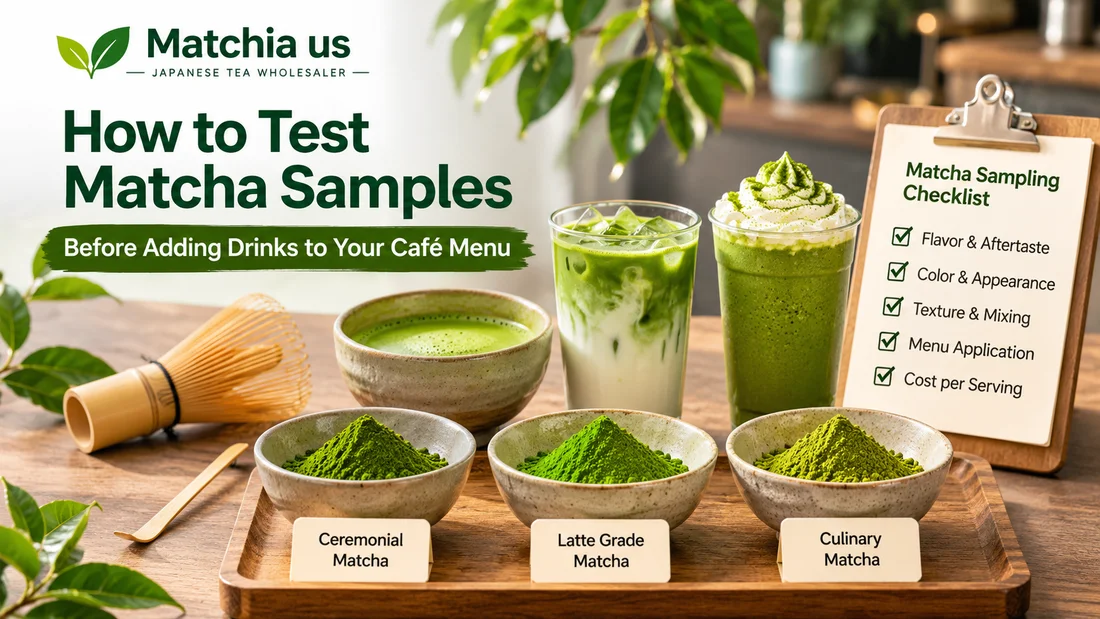
Adding matcha to a café menu sounds simple until you start comparing different powders. Two matcha samples may look similar when dry but taste quite different once mixed with milk, water, or sweeteners.
For café owners, coffee shops, boba tea businesses, and beverage brands, choosing matcha involves more than finding an attractive green powder. The product needs to work with the drinks you plan to serve, your preparation methods, and your customers' expectations.
A structured sample test can make that decision easier.
1. Start With the Drinks You Actually Plan to SellBefore requesting samples, decide how you intend to use matcha.
Are you preparing iced matcha lattes, traditional whisked matcha, matcha tonics, or blended drinks? Each application can benefit from a different flavor profile.
For example, a café serving mostly iced matcha lattes may prioritize a powder that works well with milk. A specialty tea bar serving matcha with water may focus more on the tea's natural aroma, sweetness, and umami.
Matchia us offers several Japanese matcha categories, including conventional ceremonial, USDA Organic ceremonial, latte grade, culinary, premium, ultra ceremonial, and single origin matcha.
Understanding your menu is the first step toward identifying which grades are worth testing.
2. Compare Samples Using the Same RecipeOne common mistake is preparing different matcha samples using different recipes.
If one drink contains more milk or sweetener than another, it becomes difficult to judge the powder itself.
Instead, create a consistent testing process.
Use the same amount of matcha, the same liquid volume, the same milk brand, and the same preparation method for every sample.
Test each powder in the actual drink you intend to sell.
For example, if your café plans to serve an iced oat milk matcha latte, prepare every sample with the same oat milk and ice quantity.
This makes differences in taste, color, and texture easier to identify.
3. Evaluate Flavor, Color, and TextureDuring testing, focus on the characteristics your customers will experience.
Flavor: Does the matcha taste balanced in your recipe? Is it too bitter, too mild, or suitable for the drink you want to create?
Color: How does the prepared beverage look? Does its appearance fit your menu presentation?
Texture: Does the powder disperse well when prepared correctly? Are there noticeable clumps or an unpleasant mouthfeel?
Aftertaste: Is the finish enjoyable, or does it leave an unwanted bitterness?
A powder that tastes excellent when whisked with water may perform differently in a sweetened milk drink.
That does not necessarily mean one grade is better than another. It may simply mean the powders are intended for different applications.
4. Test the Drink Under Normal Café ConditionsA successful sample test should go beyond a single tasting.
Prepare the drink the way your staff would during a normal shift.
Consider how easy the powder is to measure, mix, and serve. Check whether your preparation method can produce similar results across several drinks.
For iced beverages, observe the drink shortly after preparation and again after it has been sitting for a few minutes.
For hot beverages, evaluate the taste and texture at the temperature customers would normally receive.
If multiple employees prepare drinks, ask them to follow the same recipe and compare the results.
These small tests can help identify practical issues before a new menu item is introduced.
5. Consider Matcha for Different Menu ApplicationsNot every business needs the same matcha grade.
Matchia us lists conventional latte grade matcha for milk-based beverages and culinary grade matcha for baking, desserts, and food manufacturing.
Its ceremonial grades are positioned toward traditional matcha preparation and premium café drinks.
For a café that serves both drinks and desserts, testing more than one grade may make sense.
For example, the matcha selected for a signature whisked drink may not be the most suitable option for cookies, cakes, or ice cream.
The goal is to match the ingredient to its intended use rather than relying on the grade name alone.
6. Calculate the Cost Per ServingWholesale ingredient prices matter, but the price per kilogram does not tell the entire story.
Consider how much matcha your recipe uses per serving.
A simple calculation can help:
Matcha cost per serving = Price per kilogram ÷ 1,000 × Grams used per drink
Then account for milk, sweeteners, cups, packaging, labor, and other operating costs.
Comparing the finished drink cost can help you determine whether a matcha grade fits your menu pricing.
Remember that the lowest ingredient price is not always the best choice if the final drink does not meet your quality expectations.
7. Ask About Samples Before Ordering in BulkTesting samples is a practical way to reduce uncertainty before placing a larger wholesale order.
Matchia us offers matcha samples for businesses evaluating different grades. Its wholesale FAQ explains that samples can be used to compare color, flavor, and performance before making a purchasing decision.
When requesting samples, provide useful details about your business.
Mention whether you operate a café, boba tea shop, bakery, restaurant, or beverage brand. Explain the products you intend to make, your expected order volume, and your delivery location.
This information can help the supplier recommend relevant grades rather than sending options that do not match your application.
8. Keep a Simple Testing RecordAfter testing, record the results while they are still fresh.
A useful sample evaluation sheet might include:
Matcha grade and sample name
Intended drink or food application
Flavor and aftertaste
Color after preparation
Texture and ease of mixing
Cost per serving
Staff feedback
Final decision
This record can be helpful when comparing samples, discussing options with a supplier, or updating your menu later.
It also gives your team a reference when deciding whether to introduce another matcha beverage.
Working With Matchia usMatchia us is a Japanese matcha and hojicha wholesale supplier based in Hayward, California, serving businesses across the United States.
Its product range includes ceremonial, organic, latte, culinary, premium, ultra ceremonial, and single origin matcha, along with Japanese hojicha powder.
The company also provides wholesale samples, custom blends, private label options, and packaging services for qualifying business requirements.
For cafés and beverage brands planning a new matcha menu, starting with product samples and a consistent testing process can help make ingredient selection more informed.
Explore available wholesale matcha grades and sample options through the official website: