
 Australia
 Canada
 Cayman Islands
 Dominican Republic
 Hong Kong
 India
India
 Indonesia
 Ireland
 Jamaica
 New Zealand
 Singapore
 Thailand
 United Kingdom
 Vietnam

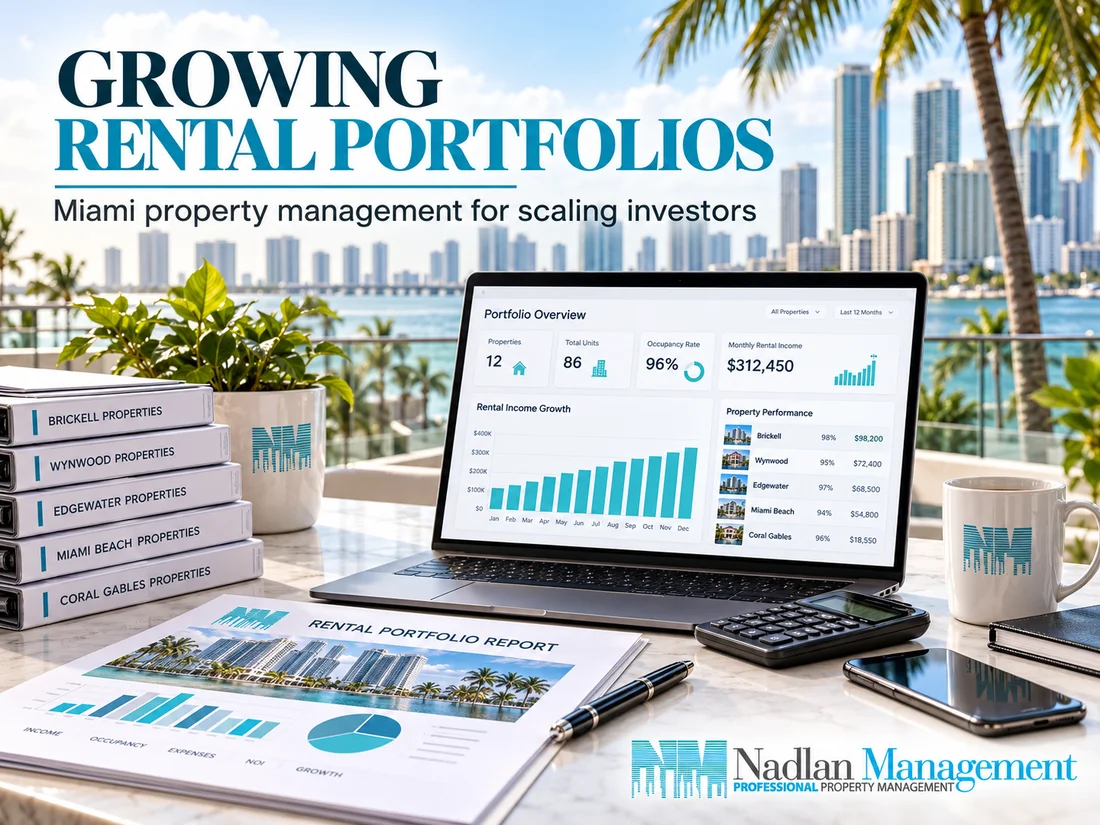
Owning one rental property and owning several rental properties can feel like two completely different businesses.
As a Miami rental portfolio grows, the challenge is often no longer any single tenant, repair or lease. The challenge becomes keeping everything organized at the same time.
For property owners and real estate investors throughout Miami-Dade and Broward Counties, professional property management can become increasingly valuable as the number of units, tenants, vendors and transactions grows.
The Need for Organization Changes With Scale
A landlord with one rental property may be able to keep track of important information personally.
As additional properties are added, there are more lease dates, rent payments, maintenance requests, tenant communications and expenses to monitor.
Processes that worked well for one unit may become difficult to maintain across five, ten or twenty units.
Growth often creates the need for stronger systems.
Keep Lease Information Organized
Every rental property has important dates.
Lease expirations, renewals and upcoming vacancies should be easy to identify without searching through individual files.
As a portfolio grows, overlooking even one important date can create unnecessary problems.
An organized lease-management process helps owners understand what is coming next across the entire portfolio.
Track Rent Across Multiple Properties
Rent collection becomes more complicated when several tenants are paying different amounts at different times.
Owners should be able to see what rent was expected, what was received and whether any balances remain outstanding.
That information becomes increasingly important as the number of rental units grows.
Clear records also make it easier to evaluate the performance of individual properties.
Create a Consistent Leasing Process
Vacancies are a normal part of rental-property ownership.
With a larger portfolio, however, more than one vacancy can occur at the same time.
Having a consistent process for marketing, showing properties, reviewing applications and preparing leases can make leasing easier to manage across multiple units.
Consistency also helps prevent every vacancy from becoming a completely separate project.
Monitor Maintenance Across the Portfolio
One maintenance request may be easy to manage.
Several requests occurring across different properties can become much more time-consuming.
Owners need a way to understand what has been reported, what work is underway and whether the same issues are appearing repeatedly.
Tracking maintenance across the portfolio can also help identify properties or building systems that are generating unusually high repair costs.
Understand Which Properties Are Performing Best
Not every rental property performs the same way.
One property may maintain stable occupancy with relatively few repairs, while another may experience more turnover or higher operating expenses.
Organized property management and reporting can help owners compare performance rather than viewing the portfolio only as one combined number.
That information can be useful when making future investment decisions.
Watch Vacancy Across Multiple Units
Vacancy has a larger effect as a portfolio grows.
Owners should know which units are vacant, which may become vacant soon and how long available properties have remained on the market.
This makes it easier to identify whether vacancy is isolated or becoming a broader issue.
It can also help owners evaluate pricing and leasing decisions using information from the entire portfolio.
Keep Tenant Communication Manageable
More units generally mean more tenant communication.
Questions about rent, leases, maintenance and other property matters can quickly become difficult to manage when conversations are spread across calls, texts and emails.
A consistent communication process helps keep property-related information organized.
For many owners, reducing the amount of direct day-to-day tenant communication is one of the reasons professional management becomes attractive as the portfolio expands.
Review Income and Expenses Regularly
A larger portfolio creates more financial activity.
Rental income, repair expenses, vendor invoices and other operating costs should be organized in a way that allows the owner to understand what is happening.
Good reporting can help an investor see both the overall portfolio and the performance of individual properties.
Without organized information, growth can make the financial side of rental ownership increasingly difficult to evaluate.
Avoid Building a Portfolio Around the Owner's Personal Time
One common challenge for growing investors is that every new rental can create additional work for the owner.
Eventually, the amount of time available may become the limiting factor.
Professional Miami property management can help separate property ownership from many of the recurring operational responsibilities associated with rental real estate.
The owner can remain focused on investment decisions while management handles the ongoing day-to-day work.
Growth Does Not Have to Mean a Large Portfolio
There is no specific number of units at which professional property management suddenly becomes necessary.
Some owners prefer management for a single rental property.
Others self-manage several units successfully before deciding they want assistance.
The important question is whether the current system is allowing the owner to manage the properties efficiently without creating unnecessary demands on their time.
Miami Property Management for Individual Owners and Growing Portfolios
Nadlan Management provides full-service Miami property management for private rental-property owners and real estate investors throughout Miami-Dade and Broward Counties.
We work with owners ranging from individual investors with a single rental property to owners of larger rental portfolios.
Our experience includes single-family rentals, multifamily and apartment properties, commercial properties, industrial properties and Section 8 or other subsidized rental housing.
Our property management services include leasing, tenant screening, rent collection, maintenance coordination, tenant communication, lease administration, bookkeeping and monthly owner reporting.
Learn more at NadlanManagement.com