Australia
 Canada
 Cayman Islands
 Dominican Republic
 Hong Kong
 India
 Indonesia
 Ireland
 Jamaica
 New Zealand
 Singapore
 Thailand
 United Kingdom
 Vietnam

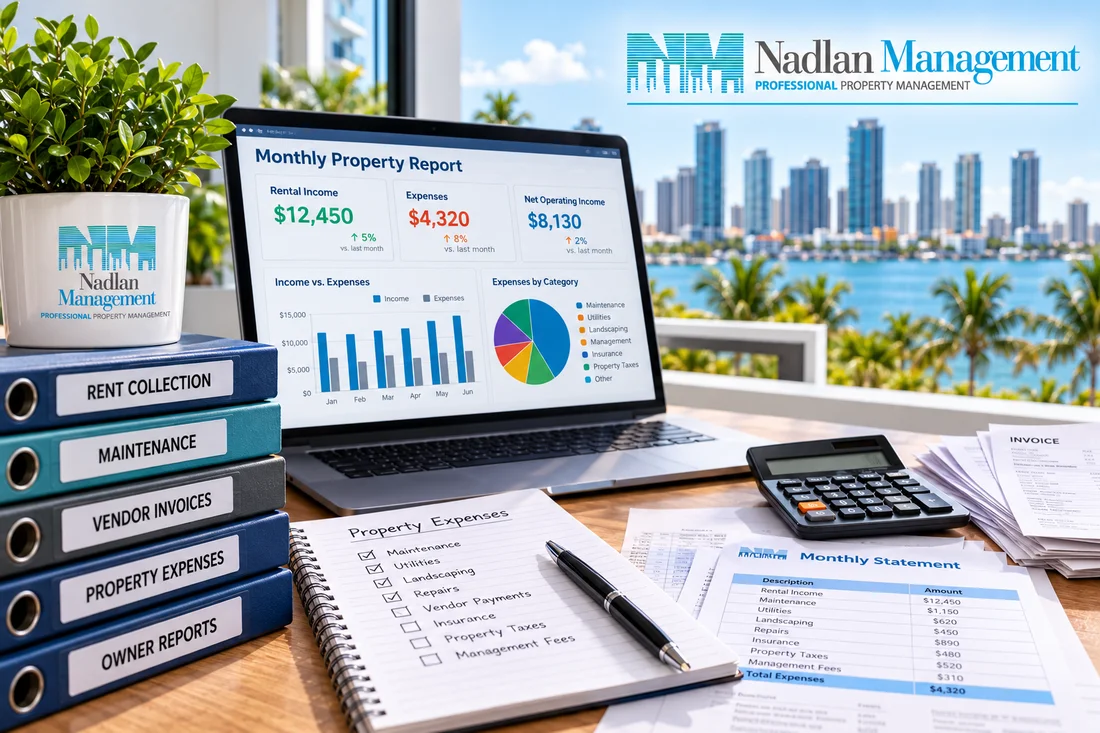
Owning rental property means managing more than tenants and maintenance.
It also means keeping track of money moving in and out of the property.
For rental property owners in Miami-Dade and Broward Counties, organized recordkeeping can make it much easier to understand whether a property is performing the way it appears to be.
Without clear records, rental income can look strong while repairs, services and other costs quietly reduce the property's results.
Track Rental Income Clearly
Owners should be able to see how much rent was expected and how much was actually collected.
That becomes more important when managing several units or properties.
A clear record should make it easy to understand which payments were received and whether any balances remain outstanding.
Rental income should not have to be reconstructed later from scattered notes and messages.
Separate Property Expenses
Expenses should be organized so the owner can understand where money is being spent.
That may include maintenance, utilities, vendor charges, supplies, landscaping and other operating costs.
Looking only at the total amount spent can hide useful information.
Breaking expenses into categories makes it easier to identify patterns.
Keep Vendor Payments Organized
Rental properties often involve multiple vendors.
Owners may be paying plumbers, electricians, air-conditioning contractors, landscapers and other service providers throughout the year.
Keeping invoices and payment records organized helps show what work was performed and what it cost.
It also makes it easier to review repeated expenses involving the same property or system.
Watch Maintenance Costs Over Time
One repair may not mean much by itself.
Repeated repairs can tell a different story.
Organized records help owners see whether maintenance expenses are increasing over time or whether one property is generating more repairs than others.
That information can help owners make better decisions about future spending.
Understand the Difference Between Income and Cash Flow
A property can collect a large amount of rent and still produce disappointing results.
Operating expenses matter.
Owners should look at income together with the costs required to run the property.
Seeing both sides gives a much clearer picture than focusing only on the monthly rent roll.
Compare Properties Separately
Owners with multiple rentals should be able to see how each property performs.
One property may have strong occupancy and low expenses.
Another may generate similar rent but require significantly more maintenance.
When records are separated properly, owners can compare properties instead of viewing the entire portfolio as one combined number.
Track Vacancy Costs
Vacancy affects property performance even when there is no direct bill attached to it.
A vacant unit produces no rent while many property costs may continue.
Owners should understand when a unit became vacant, when it was rented again and how much income was missed during the gap.
This can make vacancy trends easier to evaluate.
Keep Turnover Expenses Visible
Tenant turnover can create several expenses at once.
Cleaning, painting, repairs and other preparation costs may all occur before the next tenant moves in.
Keeping those expenses organized helps owners understand the true cost of turnover.
That can also provide useful context when evaluating future renewal decisions.
Review Large or Unusual Expenses
Large expenses should be easy to identify.
If one month includes significantly higher costs than normal, the owner should be able to understand why.
Clear records make it easier to separate ordinary operating expenses from unusual repairs or one-time costs.
Look at Trends Instead of One Month
A single month does not always tell the whole story.
Rental property performance is easier to understand when income and expenses are reviewed over time.
Owners may begin to see seasonal changes, rising maintenance costs, repeated vacancies or other patterns that are difficult to notice month by month.
Keep Property Records Consistent
The way records are organized should remain consistent.
Changing categories or tracking methods constantly can make it harder to compare one period with another.
Consistency helps owners understand how the property is changing over time.
It also makes reports easier to review.
Good Records Help Owners Make Better Decisions
Organized records are not only about keeping paperwork in order.
They can help owners answer practical questions.
Is one property costing more to operate than expected?
Are maintenance expenses increasing?
Is vacancy affecting income?
Are several small expenses becoming a larger problem?
Clear records make those questions easier to answer.
Avoid Managing From Memory
Owners who are actively involved in several properties may feel like they know what is happening financially.
But memory is not a reliable management system.
Small repairs, vendor payments and missed income can easily be forgotten.
Organized records provide a more accurate picture of property performance.
Miami Property Management and Owner Records
Nadlan Management provides full-service Miami property management for private property owners and real estate investors throughout Miami-Dade and Broward Counties.
We manage single-family rentals, multifamily and apartment properties, commercial properties, industrial properties and Section 8 or other subsidized rental housing.
Our property management services include leasing, tenant screening, rent collection, maintenance coordination, tenant communication, lease administration, bookkeeping and monthly owner reporting.
For rental owners, organized records can make it much easier to understand how each property is actually performing.
Learn more at NadlanManagement.com