Australia
 Canada
 Cayman Islands
 Dominican Republic
 Hong Kong
 India
 Indonesia
 Ireland
 Jamaica
 New Zealand
 Singapore
 Thailand
 United Kingdom
 Vietnam

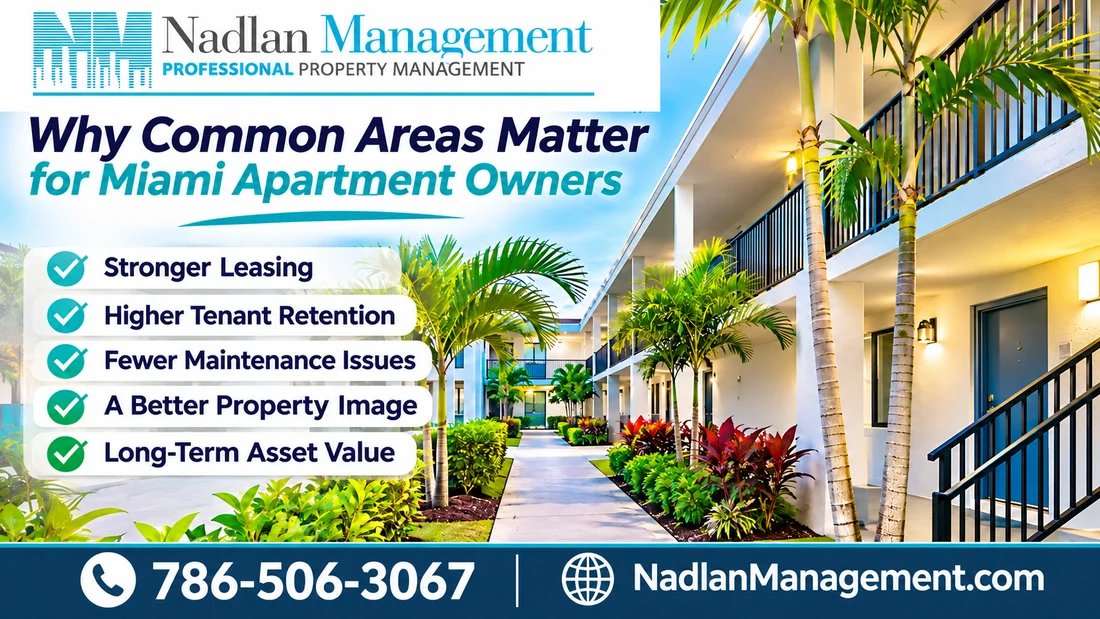
Apartment owners naturally focus on the condition of individual units.
That makes sense. The apartment is what the tenant ultimately rents.
But in a multifamily property, the resident's experience begins long before they open the front door.
Parking areas, walkways, hallways, stairwells, exterior lighting, landscaping, trash areas, entryways, laundry rooms, and other shared spaces all affect how the property feels.
For Miami apartment owners, common areas can influence leasing, tenant satisfaction, maintenance costs, and the overall perception of the building.
A property can have attractive apartments and still create a poor first impression if the areas surrounding those units are neglected.
The Leasing Experience Starts Outside the Apartment
Prospective tenants begin evaluating a property as soon as they arrive.
Before seeing the kitchen, bathroom, flooring, or bedroom, they may already have noticed:
- landscaping
- parking conditions
- exterior paint
- lighting
- trash areas
- walkways
- stairwells
- building entrances
- overall cleanliness
Those observations influence how a prospective tenant views the property.
If the building looks poorly maintained outside the unit, a renter may wonder whether maintenance inside the apartment will be handled the same way.
First Impressions Can Affect Leasing Speed
Owners sometimes respond to a slow vacancy by changing the asking rent or improving the apartment itself.
But the issue may not always be inside the unit.
Imagine two similar apartments at similar rents.
One is located in a building with clean walkways, maintained landscaping, good lighting, organized trash areas, and a clean entrance.
The other has an attractive apartment but neglected common areas.
Many prospective tenants will notice the difference immediately.
Common-area condition can therefore become part of the leasing process even though it is not technically part of the apartment being rented.
Small Common-Area Problems Can Become Bigger Problems
Some common-area issues are inexpensive when handled early.
A loose handrail, damaged light fixture, minor landscape problem, leaking exterior faucet, broken door closer, or small section of damaged paint may be relatively simple to address.
When those items remain unresolved, they can become more expensive or create additional problems.
Regular property walks can help management identify issues before tenants repeatedly report them or they become larger maintenance projects.
Lighting Deserves Regular Attention
Exterior and common-area lighting is one of the easiest items for owners to overlook.
A light may fail between inspections and remain unnoticed unless someone reports it.
Management should periodically review areas such as:
- parking lots
- walkways
- stairwells
- building entrances
- laundry areas
- hallways
- exterior corridors
A property should not depend exclusively on tenants to identify every failed fixture.
Trash Areas Can Affect the Entire Property
A poorly managed trash area can quickly change the appearance of an apartment building.
Overflowing containers, discarded furniture, loose garbage, or debris can make an otherwise well-maintained property appear neglected.
Trash areas should be monitored as part of routine property operations.
If problems occur repeatedly, management should determine why.
The issue may involve collection frequency, container capacity, tenant behavior, illegal dumping, or the physical layout of the trash area.
Simply cleaning the same problem repeatedly may not solve the underlying cause.
Landscaping Is More Than Decoration
Landscaping contributes to curb appeal, but it can also reveal whether the property is being actively managed.
Overgrown vegetation, dead plants, debris, or poorly maintained grass can make a building look neglected.
At the same time, landscaping expenses should still be monitored.
The objective is not necessarily elaborate landscaping.
For many rental properties, clean, consistent, and manageable landscaping is more valuable than an expensive design that requires constant attention.
Stairwells and Walkways Need Routine Inspections
In many Miami multifamily properties, exterior walkways and stairwells are heavily used every day.
Those areas can develop problems involving:
- peeling paint
- damaged railings
- lighting
- debris
- water accumulation
- cracked surfaces
- doors
- locks
- signage
Because residents see these areas constantly, even relatively small problems can affect the overall perception of the building.
Regular inspections allow management to create a repair list rather than waiting for problems to accumulate.
Laundry and Shared Facilities Affect Resident Experience
If a property provides shared laundry or other common facilities, those areas become part of the service residents expect from the building.
Owners should know whether equipment is working, whether the area is clean, and whether recurring problems are being tracked.
A broken machine that remains out of service for weeks may seem minor from an accounting perspective but can become a significant frustration for residents who depend on it.
Common Areas Can Affect Tenant Retention
When a lease expires, tenants consider more than the apartment itself.
They remember their experience living at the property.
That experience includes:
- how maintenance was handled
- cleanliness of the property
- condition of shared areas
- communication with management
- recurring property problems
- overall upkeep
Not every resident will renew, and owners should not spend money simply to prevent every move-out.
But unnecessary dissatisfaction caused by neglected property conditions can create avoidable turnover.
Property Walks Help Owners See What Reports May Miss
Financial reports can show maintenance expenses.
Tenant ledgers can show rent collection.
Leasing reports can show vacancy.
But none of those reports necessarily show that a stairwell needs painting or that the trash area looks poor.
That is why physical property inspections remain important.
Regular property walks can identify issues that may never appear in accounting reports until they become expensive.
Look for Patterns Across the Property
Common-area management should also involve identifying recurring problems.
If the same exterior light repeatedly fails, the issue may be more than the bulb.
If water consistently accumulates in the same walkway, there may be a drainage problem.
If trash repeatedly appears outside the designated area, the property may need a different operational solution.
The goal is not simply to correct what is visible.
It is to understand why the problem keeps returning.
Do Not Wait Until the Property Looks Bad
One of the easiest mistakes in multifamily ownership is allowing many small issues to accumulate.
One damaged fixture may not matter much.
Neither may one section of peeling paint.
But when several small problems appear at the same time, the entire property can begin to look poorly maintained.
Addressing smaller items consistently can help avoid the need for a larger property-wide cleanup later.
The Bottom Line for Miami Multifamily Owners
Apartment management does not stop at the tenant's front door.
Common areas are part of the property residents experience every day and part of what prospective tenants see when deciding whether they want to live there.
Owners should regularly monitor entrances, parking areas, lighting, walkways, stairwells, landscaping, trash areas, laundry facilities, and other shared spaces.
A clean and consistently maintained property can support leasing, tenant satisfaction, and the long-term condition of the asset.
Nadlan Management provides full-service property management for multifamily, apartment, single-family, and Section 8 rental properties throughout Miami-Dade and Broward Counties.
Our services include leasing, tenant screening, rent collection, maintenance coordination, property inspections, unit turns, lease administration, bookkeeping, vendor management, Section 8 management support, and owner reporting.
Nadlan Management
786-506-3067
NadlanManagement.com