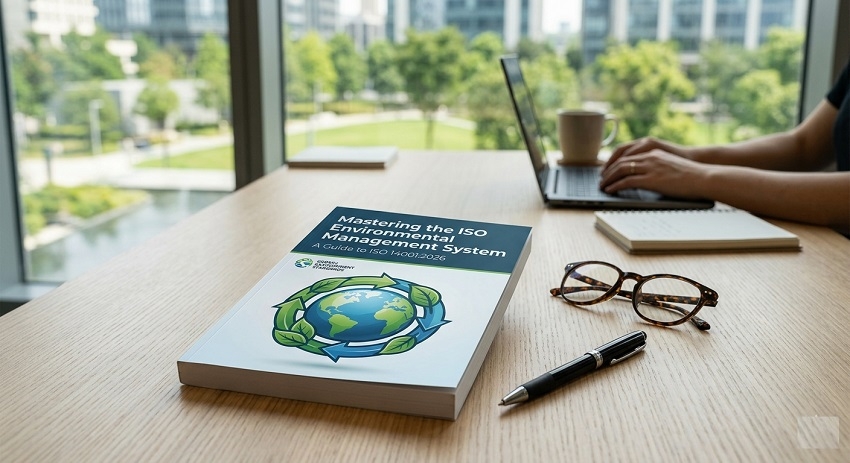
Sustainable Advantage: Leveraging ISO 14001:2026 for Business Growth
By Norocke Consulting Pty Ltd
· 03/31/2026
In today’s global economy, “going green” is no longer a PR slogan—it’s a core business requirement. At the heart of this transition is the ISO Environmental Management System (EMS), specifically the ISO 14001 standard. https://www.nrkc.co.za/mastering-the-iso-environmental-management-system-a-guide-to-iso-140012026/ With the recent release of ISO 14001:2026, organizations are finding new ways to integrate sustainability into their DNA. Whether you are seeking certification for the first time or transitioning from the 2015 version, this guide breaks down everything you need to know about building a future-ready EMS. What is an ISO Environmental Management System? An Environmental Management System (EMS) is a structured framework that helps an organization identify, manage, monitor, and control its environmental issues in a holistic manner. The ISO 14001 standard is the international benchmark for an EMS. It doesn’t dictate specific environmental performance levels; instead, it provides a “Plan-Do-Check-Act” (PDCA) roadmap that allows any business—from manufacturing to software—to improve its resource efficiency and reduce waste. Key Changes in ISO 14001:2026: What’s New? The 2026 update reflects the world’s urgent focus on climate resilience and biodiversity. If you’re aiming for the top of your industry, these are the four pillars of the new standard: Climate Change & Biodiversity: Clauses 4.1 and 4.2 now explicitly require organizations to determine whether climate change and biodiversity loss are relevant factors in their business context. Life Cycle Perspective (LCP): While mentioned in 2015, the 2026 version demands a more rigorous look at upstream (suppliers) and downstream (product end-of-life) impacts. Structured Change Management (Clause 6.3): A brand-new requirement for 2026. Organizations must now have a formal, documented process for managing changes that could impact their environmental performance. Enhanced Leadership Accountability: Top management is now directly accountable for the effectiveness of the EMS, moving beyond simple delegation. Benefits of ISO 14001 Certification Why should your business invest in an ISO Environmental Management System? Beyond the obvious benefit of protecting the planet, the business case is clear: Cost Savings: By optimizing energy use and reducing waste, companies often see a significant drop in utility and material costs. Regulatory Compliance: Stay ahead of tightening environmental laws and avoid heavy fines. Competitive Advantage: Many government and corporate tenders now require ISO 14001 certification as a prerequisite. Investor Confidence: ESG (Environmental, Social, and Governance) scores are heavily influenced by a certified EMS. The 5 Steps to Implementing your EMS Getting started doesn’t have to be overwhelming. Follow this proven path: Step Action Item Focus Area 1. Gap Analysis Compare current processes to ISO 14001:2026 requirements. Identification 2. Policy & Planning Define your environmental policy and set SMART objectives. Strategy 3. Implementation Train staff and establish operational controls. Operations 4. Internal Audit Test the system to ensure it’s working as intended. Verification 5. Certification Undergo a 3rd-party audit to receive your official certificate. Recognition Frequently Asked Questions (FAQ) What is the deadline to transition to ISO 14001:2026? Most accreditation bodies have set a 3-year transition period. If you hold an ISO 14001:2015 certificate, you generally have until April 2029 to transition, but starting early is highly recommended to align with 2026 climate disclosure requirements. Is ISO 14001 mandatory? No, it is a voluntary international standard. However, many industries treat it as a “license to operate” due to supply chain requirements. Can small businesses implement an EMS? Absolutely. The standard is designed to be scalable. A small office will have a much simpler EMS than a large-scale chemical plant. Ready to Elevate Your Environmental Performance? Navigating the world of ISO Environmental Management Systems is a journey of continual improvement. By adopting the 2026 standards today, you aren’t just checking a compliance box—you’re building a resilient, sustainable brand for the next decade.
About This Author

Norocke Consulting Pty Ltd
Cleveland, Ohio, United States
ISO Certificate Consulting Agency Pretoria Elevate Your Organization with ISO Certification Are you looking to improve your business processes, enhance customer satisfaction, and gain a competitive edge? Our ISO Certificate Consulting Agency offers expert guidance to help you achieve your goals. Our…
More Articles From This Author
What is an ISO Quality Management System (QMS)?
2026-07-07An ISO Implementation for Quality Management System (QMS) is a formalized framework of policies, processes, and documented procedures designed to help organizations consistently deliver products and services that meet customer and regulator… Read More »
 Australia
 Canada
 Cayman Islands
 Dominican Republic
 Hong Kong
 India
India
 Indonesia
 Ireland
 Jamaica
 New Zealand
 Singapore
 Thailand
 United Kingdom
 Vietnam

 United States Business Directory