Australia
 Canada
 Cayman Islands
 Dominican Republic
 Hong Kong
 India
 Indonesia
 Ireland
 Jamaica
 New Zealand
 Singapore
 Thailand
 United Kingdom
 Vietnam

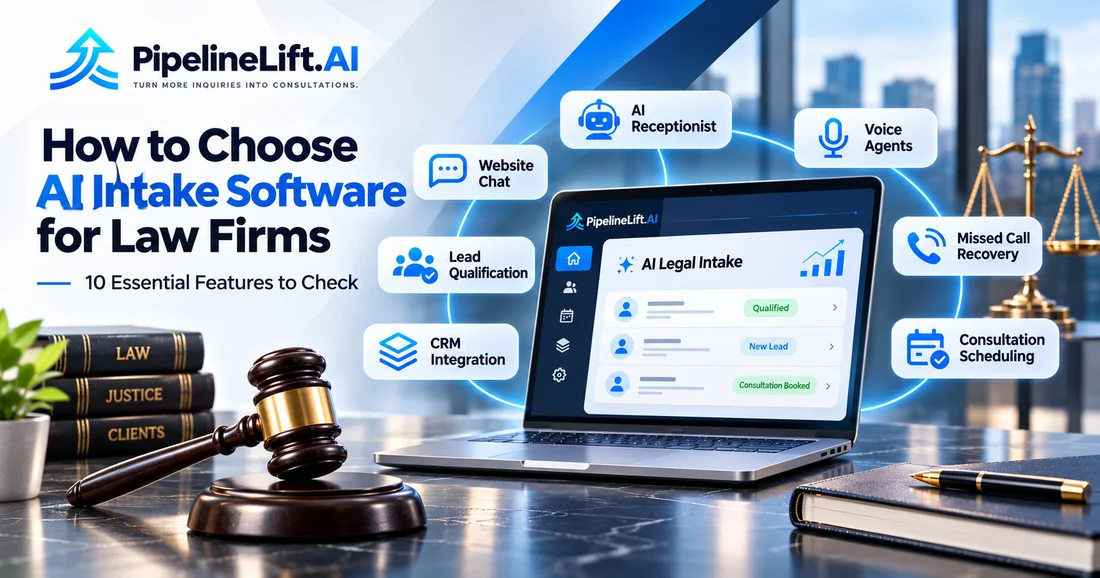
Law firms invest in Google Ads, SEO, and referrals to attract potential clients. However, generating inquiries is only part of the client acquisition process. How quickly a firm responds, qualifies prospective clients, and follows up can influence whether an inquiry progresses to a consultation.
For growing law firms, managing phone calls, website messages, emails, and appointment requests can become challenging as inquiry volume increases.
AI intake software for law firms helps automate routine communication, organize potential client information, and support more consistent follow-up.
But not every AI receptionist or legal intake automation platform offers the same capabilities.
Before choosing a solution, law firm owners and operations managers should evaluate the following ten features.
1. Multichannel Legal Intake AutomationProspective clients contact law firms through different communication channels. Some prefer calling, while others submit website forms, send text messages, or use live chat.
An effective legal intake automation platform should support the channels your firm uses.
Important capabilities include:
AI voice agents for incoming calls
Automated SMS communication
AI-powered website chat
Email follow-up automation
Lead capture and contact organization
A connected intake process helps your team manage conversations without relying on multiple disconnected systems.
2. AI Receptionist AvailabilityLaw firm inquiries do not always arrive during regular business hours.
Potential clients may contact a firm during evenings, weekends, or holidays.
A 24/7 AI receptionist for law firms can help acknowledge inquiries, collect initial information, and guide callers toward an appropriate next step.
Before selecting software, ask whether its automated receptionist can handle after-hours calls, recognize when human assistance is required, and transfer or route inquiries according to your firm's policies.
The goal is to improve accessibility without removing professional oversight.
3. Intelligent Lead QualificationNot every inquiry is relevant to a law firm's practice areas.
AI intake qualification software should help collect basic information so the intake team can understand each prospective client's needs.
Depending on the firm's approved workflow, the system may collect:
Contact information
General matter category
Preferred communication method
Relevant intake details
Consultation availability
The qualification process should follow criteria established by the law firm. AI should not independently determine legal merit or provide legal advice.
4. Missed Call RecoveryMissed calls can create gaps in a firm's client acquisition process.
A prospective client may call while the intake team is busy or after the office has closed.
Missed call recovery software can help initiate an appropriate follow-up and bring unanswered inquiries back into the intake workflow.
When evaluating a solution, consider whether it can identify missed calls, support timely follow-up, and track what happened after the initial contact.
5. Automated SMS and Email Follow-UpsA potential client may not schedule a consultation immediately after their first inquiry.
Some prospects need additional information, while others may be unavailable when the firm responds.
Automated SMS and email follow-up workflows can help maintain communication and guide prospects through the next stages of intake.
Law firms should look for systems that support customizable messaging, contact preferences, clear opt-out handling, and human oversight.
6. Consultation Scheduling AutomationMoving a qualified inquiry toward a scheduled consultation is an important part of legal intake.
AI-powered scheduling tools can help collect availability information, coordinate appointments, and reduce unnecessary administrative work.
Before selecting a platform, consider whether it can work with the firm's scheduling process, apply relevant booking rules, and route complex situations to the intake team.
7. CRM and Lead Management IntegrationMany law firms already use customer relationship management or legal practice management software.
A new AI intake solution should complement existing workflows rather than create additional manual work.
Evaluate the platform's supported integrations and confirm which contact information, intake updates, appointment details, and communication records can be transferred.
Do not assume that every CRM integration is available without additional configuration.
8. Data Privacy and Human OversightLegal intake conversations may involve sensitive personal information.
Law firms should carefully evaluate how an AI provider handles data access, storage, confidentiality, permissions, and human supervision.
The American Bar Association's Formal Opinion 512 discusses professional responsibilities related to lawyers' use of generative AI, including competence, confidentiality, communication, and supervision.
When comparing legal AI software, firms should ask how the platform supports their applicable professional obligations.
9. Personalized Implementation and Intake AuditingAn AI intake system should reflect the way a particular law firm operates.
Different firms have different practice areas, qualification questions, team structures, and consultation processes.
Before implementation, it is useful to examine current response procedures, missed inquiries, follow-up gaps, and opportunities for better coordination.
PipelineLift AI offers a Free Pipeline Audit™ to help law firms identify potential weaknesses in their existing intake process.
The platform also provides personalized configuration and onboarding designed around a firm's workflow.
10. Transparent Pricing and Measurable PerformanceSoftware pricing should be evaluated alongside implementation requirements, usage costs, and operational value.
Ask providers how their pricing works, what services are included, and whether additional configuration or usage charges apply.
Law firms should also identify meaningful intake performance indicators, including:
Incoming inquiries
First-response time
Missed calls
Qualified leads
Scheduled consultations
Consultation attendance
Signed-client outcomes, where tracked
These measurements can help firms understand whether an intake solution supports their business goals.
How PipelineLift AI Supports Growing Law FirmsPipelineLift AI is a legal technology SaaS platform designed specifically for law firms.
Its AI-powered intake platform combines several important capabilities:
AI Voice Agents
AI SMS Agents
AI Website Chat
AI Email Follow-Up
Missed Call Recovery
AI Lead Qualification
Consultation Scheduling
Human Handoff
Pipeline Visibility
Free Pipeline Audit™
PipelineLift AI helps growing firms automate repeatable intake tasks while keeping attorneys and intake professionals responsible for matters requiring human judgment.
The platform supports communication from initial inquiry through qualification and consultation scheduling.
With a listed business address in Sheridan, Wyoming, PipelineLift AI provides legal intake automation solutions to law firms across the United States.
Frequently Asked QuestionsWhat is AI intake software for law firms?AI intake software helps law firms automate routine prospective-client communication, collect information, qualify inquiries using established criteria, and support follow-up and scheduling.
Can an AI receptionist answer calls outside business hours?AI receptionist platforms may provide automated call handling outside normal working hours. Capabilities vary by provider, so firms should verify how calls, urgent situations, and human handoffs are handled.
Does legal intake automation replace an intake team?Not necessarily. AI can handle repeatable communication and administrative tasks while the firm's team manages legal judgment, sensitive matters, and relationships with prospective clients.
Can AI intake software integrate with an existing legal CRM?Some platforms offer CRM integrations or configurable workflows. Compatibility and available features should be verified with the provider.
How should a law firm begin evaluating AI intake software?Start by identifying current intake challenges, documenting existing workflows, and determining which processes would benefit from automation.
Final ThoughtsChoosing AI intake software for law firms requires more than comparing automated call-answering features.
Growing law firms should evaluate communication coverage, qualification workflows, missed-call recovery, follow-up capabilities, CRM compatibility, confidentiality safeguards, implementation requirements, and measurable outcomes.
PipelineLift AI offers a Free Pipeline Audit™ to help law firms assess their existing intake process and explore opportunities for more consistent client communication.
Law firms across the USA can use this assessment as a starting point for understanding where intelligent intake automation may fit into their operations.