
 Australia
 Canada
 Cayman Islands
 Dominican Republic
 Hong Kong
 India
India
 Indonesia
 Ireland
 Jamaica
 New Zealand
 Singapore
 Thailand
 United Kingdom
 Vietnam

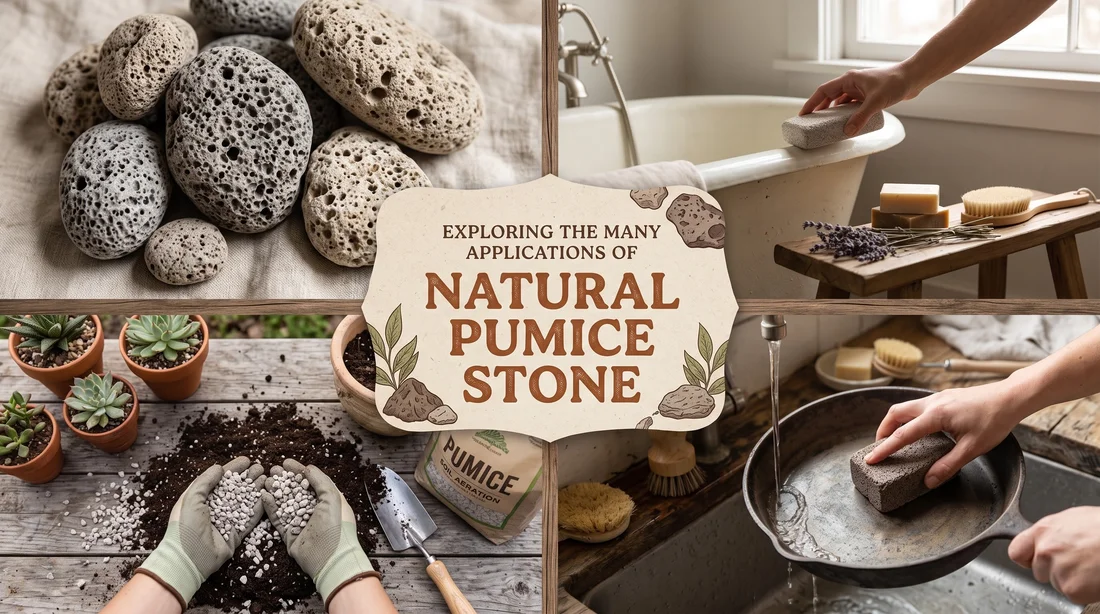
For businesses, growers, manufacturers, and consumers looking for the right material for a specific purpose, the Pumice Applications Directory provides an overview of application-specific pumice products and grades.
Pumice Applications in ConcretePumice has an important role in concrete applications. Lightweight pumice aggregate and sand can be incorporated into concrete where reduced weight is desirable. Pumice can also be processed into a pozzolan for concrete applications, helping manufacturers and builders select mineral materials according to their project requirements.
Pumice products are also available for specialized projects such as concrete canoe construction, where lightweight materials can be particularly useful.
Pumice for Cleaning and PolishingThe abrasive characteristics of pumice make it useful for cleaning and finishing applications. Pumice can be processed into fine grades for cleaning hard surfaces, while other grades can be used as finishing grit for materials such as wood and metal.
Pumice abrasive media can also be used for blasting and surface-preparation applications. The appropriate grade depends on the surface, desired finish, and application requirements.
Pumice for Skin and Personal CareFinely processed pumice is widely used as an exfoliating ingredient in scrubs, soaps, creams, and hand-cleaning products. Its natural abrasive texture allows it to provide mechanical exfoliation and cleaning.
Pumice can also be formed into shaped stones for foot-care applications. Different particle sizes and forms allow manufacturers to select pumice according to the intended product formulation or use.
Pumice for Horticulture and GardeningOne of the most popular uses for pumice is horticulture. Its porous structure makes it useful as a soil amendment and growing-media component. Pumice can help improve soil structure, aeration, drainage, and moisture management.
Pumice is particularly useful in cactus and succulent mixes, bonsai growing media, container gardening, and specialty growing systems. It can also be used as a compost amendment and in soilless growing media.
Because pumice is a durable mineral material, it can provide long-lasting physical structure within a growing medium rather than decomposing like many organic amendments.
Pumice for Texturizing CoatingsPumice can also be used as a texturizing material in coatings and sealers. Properly selected pumice grit can provide texture and grip when incorporated into products such as concrete sealers and other coating systems.
This application demonstrates how pumice can serve a functional purpose beyond traditional abrasive uses.
Pumice for Livestock and Pet ApplicationsCertain pumice grades are used in pet and livestock products. Pumice bathing dust can be used for dry-bathing applications involving animals such as chinchillas and poultry.
Pumice is also available in specially designed chew-stone applications for small pets. As with other animal-related products, the appropriate grade and product formulation should be selected specifically for the intended use.
Pumice as a Functional FillerMicronized pumice can be used as a functional filler in coatings, plastics, and other compounds. Its mineral characteristics make it suitable for manufacturers looking for a non-crystalline silica material for specific formulation requirements.
The correct particle size and grade can be important when pumice is incorporated into an industrial formulation, so application-specific material selection is essential.
Choosing the Right Pumice GradePumice is available in different particle sizes and grades because different applications require different physical characteristics. A coarse aggregate may be suitable for concrete, while a fine powder may be better suited to exfoliating formulations or industrial finishing.
When selecting pumice, consider the intended application, particle size, required texture, processing requirements, and quantity needed. The right grade can help ensure that the material performs as expected in the finished product or process.
A Versatile Natural MaterialFrom lightweight concrete and soil amendments to abrasives, exfoliants, coatings, pet products, and functional fillers, pumice has applications across many industries. Its naturally porous structure, lightweight characteristics, durability, and ability to be processed into different grades make it a versatile mineral material.
Exploring pumice by application can make it easier to identify the appropriate grade for a particular project. Whether the goal is improving a growing medium, producing a cleaning product, developing a coating, or selecting an aggregate, application-specific pumice can provide a practical material solution.