Australia
 Canada
 Cayman Islands
 Dominican Republic
 Hong Kong
 India
 Indonesia
 Ireland
 Jamaica
 New Zealand
 Singapore
 Thailand
 United Kingdom
 Vietnam

When your air conditioner is running but blowing warm air, it can be difficult to know whether the problem is minor or requires professional repair. The indoor fan may be working normally, yet your home never reaches the temperature you've set.
For homeowners in Saratoga Springs, Utah, understanding the possible causes of poor cooling can help prevent unnecessary repairs and make conversations with HVAC professionals more productive.
At Saratoga AC Compressor Repair, we share practical information about air conditioning problems, compressor troubleshooting, and cooling system maintenance.
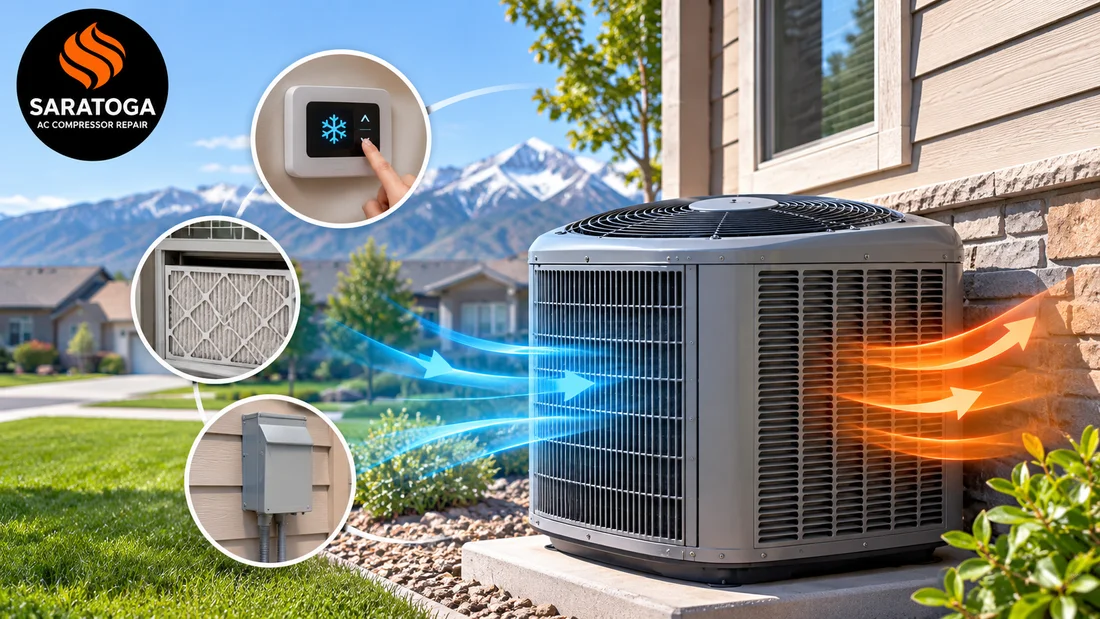
1. Incorrect Thermostat SettingsBefore assuming that your air conditioner needs repair, start with the thermostat.
An incorrect setting can cause the indoor fan to circulate air without active cooling.
Check that:
The thermostat is set to COOL.
The selected temperature is below the current indoor temperature.
The fan setting is AUTO rather than continuously ON.
Any programmed schedules are configured correctly.
If the thermostat settings appear correct but cooling does not improve, another system component may be responsible.
2. Dirty or Clogged Air FiltersA dirty air filter can significantly restrict airflow through an air conditioning system.
When insufficient air passes over the evaporator coil, cooling performance may decrease. In some cases, restricted airflow can contribute to ice forming on the coil.
Homeowners should inspect accessible filters and replace or clean them according to the equipment manufacturer's instructions.
If the system continues blowing warm air after the filter has been addressed, further diagnosis may be necessary.
3. Problems With the Outdoor Condenser UnitThe outdoor condenser unit helps release heat removed from inside your home.
Leaves, grass clippings, accumulated dirt, and nearby vegetation can restrict airflow around the equipment.
When the system struggles to release heat, cooling performance may decline.
Homeowners can safely check whether obvious debris is blocking the outdoor unit and remove loose vegetation from the surrounding area.
Avoid opening electrical panels or working near moving fan components.
If the outdoor fan is not operating normally, contact a qualified HVAC technician.
4. Refrigerant LeaksAir conditioning systems rely on refrigerant to transfer heat between indoor and outdoor components.
A refrigerant leak can reduce cooling performance and may contribute to additional equipment problems.
Possible warning signs include poor cooling, ice formation, or unusually long cooling cycles.
However, these symptoms alone do not confirm a refrigerant leak.
A qualified technician must inspect the system, locate any leak, and determine the appropriate repair.
Simply adding refrigerant without correcting a leak is not a lasting solution.
5. AC Capacitor or Electrical ProblemsElectrical components play an important role in starting and operating air conditioning equipment.
A faulty capacitor, damaged contactor, or electrical connection problem may prevent the outdoor compressor or fan motor from operating.
You might notice the indoor fan running while the outdoor cooling system does not start.
These symptoms can resemble compressor failure, making professional testing important before replacing expensive components.
Safety warning: HVAC electrical components can present serious shock hazards. Capacitors may retain an electrical charge even after power is disconnected. Electrical diagnosis and replacement should be performed by qualified professionals.
6. AC Compressor FailureThe compressor is an essential component of a central air conditioning system. It compresses refrigerant vapor and helps maintain the refrigeration cycle that moves heat out of a home.
When the compressor fails or repeatedly shuts down, the air conditioner may no longer cool effectively.
Possible symptoms include:
The outdoor unit failing to start
Humming or unusual operating noises
Repeated protective shutdowns
The indoor fan running without adequate cooling
Persistent temperature problems
These warning signs do not automatically mean the compressor needs replacement.
A professional HVAC inspection can help distinguish internal compressor damage from problems involving electrical components, controls, or other parts.
What Should Homeowners Check First?If your AC is blowing warm air, begin with a few safe observations.
Step 1: Check the thermostat. Confirm cooling mode and appropriate temperature settings.
Step 2: Inspect the air filter. Replace a dirty filter with the correct type for your system.
Step 3: Look around the outdoor unit. Check for visible debris or blocked airflow without opening equipment panels.
Step 4: Observe the system. Notice unusual sounds, repeated shutdowns, visible ice, or signs of electrical trouble.
Step 5: Arrange professional diagnosis. If the problem continues, contact a qualified HVAC professional rather than repeatedly restarting malfunctioning equipment.
AC Compressor Repair or Replacement?When an air conditioning system stops cooling, replacing the compressor is not always necessary.
A technician may discover that the underlying problem involves a capacitor, contactor, electrical control, or another serviceable component.
If the compressor has serious internal damage, replacement may be appropriate.
The decision should consider the system's age, equipment condition, warranty coverage, repair costs, and availability of compatible parts.
Homeowners should request a clear explanation of the diagnostic findings before approving major repairs.
Air Conditioning Problems in Saratoga Springs, UtahHomeowners in Saratoga Springs and nearby Utah County communities may experience cooling problems during warm weather.
Whether you're in Saratoga Springs, Eagle Mountain, Lehi, or American Fork, understanding how your cooling system works can help you recognize problems before making repair decisions.
Regular filter maintenance, clear outdoor airflow, and professional inspections when needed can support reliable equipment operation.
Frequently Asked QuestionsCan a dirty filter make an AC blow warm air?
Yes. Severe airflow restriction can reduce cooling performance and contribute to evaporator coil freezing.
Does warm air always mean the compressor has failed?
No. Incorrect thermostat settings, airflow problems, electrical faults, and refrigerant leaks can produce similar symptoms.
Should I continue running an AC that isn't cooling?
If the unit makes unusual noises, repeatedly trips a breaker, or appears to be malfunctioning, turn it off and arrange professional inspection.
Can an AC compressor be repaired instead of replaced?
It depends on the actual fault. Some apparent compressor problems are caused by replaceable electrical components, while serious internal compressor failures may require replacement.
Final ThoughtsAn air conditioner blowing warm air does not always indicate a major equipment failure.
Starting with simple checks and understanding common warning signs can help homeowners make informed decisions about professional air conditioning repair.
Saratoga AC Compressor Repair shares educational resources covering AC compressor repair, compressor replacement, HVAC troubleshooting, and cooling system maintenance for homeowners in Saratoga Springs, Utah, and surrounding communities.